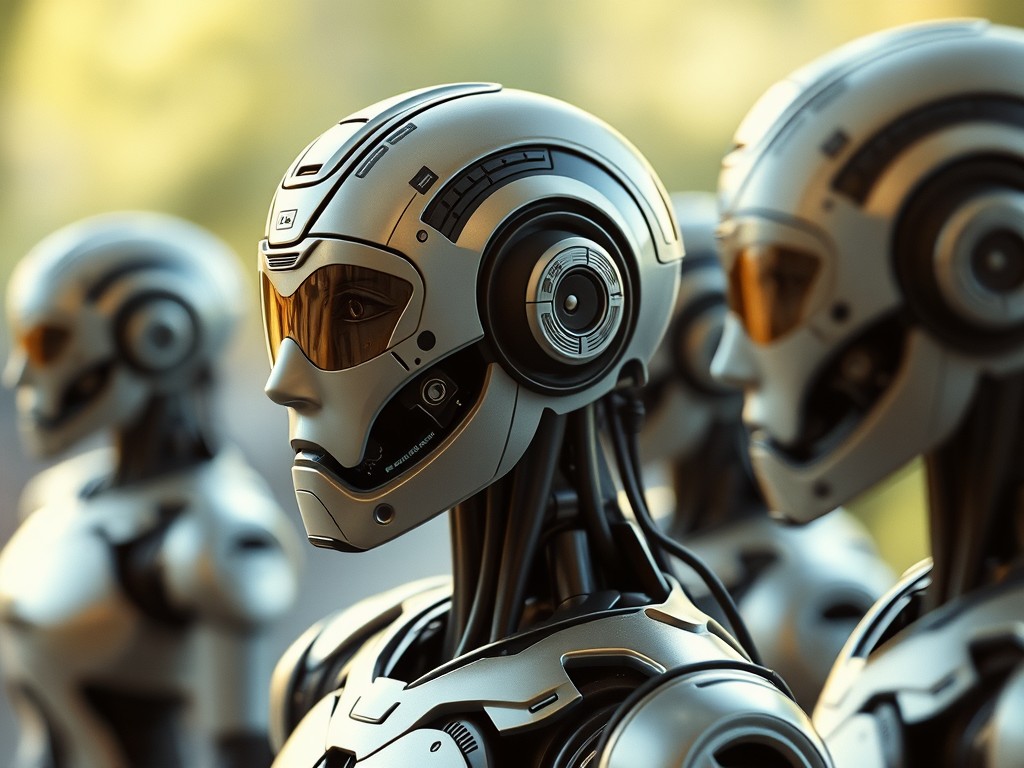
As we hurtle toward the next decade, a seismic shift in the technology landscape is taking shape. Autonomous AI agents are poised to become the primary users of enterprise systems, fundamentally transforming how businesses operate and how humans interact with technology. By 2030, these agents will be deeply integrated into the digital infrastructure of enterprises, and by 2032, interacting with agents may surpass traditional app usage for consumers. Welcome to the age of agentic systems, digital cores, and generative user interfaces.
Agentic Systems: The New Power Players
Agentic systems, or autonomous AI agents, represent a paradigm shift in software development and functionality. These systems can execute tasks, generate functions, and access APIs with unprecedented accuracy and efficiency.
Recent advancements highlight their capabilities. For instance, Anthropic’s Claude 3.5 Sonnet achieved a 49% resolution rate on SWE-Bench, a software engineering benchmark of real-world GitHub issues. This is a dramatic leap from the sub-5% success rate seen in 2023. As companies integrate these agents into workflows, engineering velocity is accelerating, enabling teams to tackle complex challenges faster than ever before.
The Digital Core: Building the Foundation
Central to this revolution is the digital core—the architecture and infrastructure underpinning AI-powered enterprises. The digital core connects data sources with analytical tools, enabling decision-making and automation.
While today’s agentic systems can address discrete aspects of the digital core, their role is expanding. According to Accenture’s survey, nearly half of executives believe agents will soon:
- Modernize and upgrade digital functions.
- Assure the quality of systems.
- Access and manage internal system functions.
Challenges remain, particularly in integrating third-party systems and accessing data organization-wide. However, the rapid pace of innovation suggests these barriers may soon be overcome.
Generative UI: Personalized User Experiences
The rise of autonomous agents is also driving the evolution of user interfaces. Generative UI leverages AI to create highly personalized interfaces tailored to individual needs and preferences.
This marks a departure from the traditional approach of designing a single UI for all users. With dynamic, language-first interfaces, companies can deliver experiences that adapt in real-time, improving usability and engagement. Lower development costs and enhanced functionality make generative UI a cornerstone of the agent-driven era.
How Businesses Can Prepare
To thrive in this new environment, businesses must embrace a phased approach to integrating AI agents:
- Start Small: Deploy task-specific internal agents to address targeted challenges.
- Expand Modularly: Gradually increase the functions and data accessible to agents, preparing for broader applications.
- Establish Governance: Implement robust monitoring systems to ensure transparency and trust. Track data access, outputs, and decision-making processes to maintain quality and consistency.
- Foster Trust: Communicate clearly with employees and stakeholders about the role and limitations of AI agents.
Guardrails and Challenges
Despite their promise, autonomous AI agents are not without challenges. They are computationally expensive, non-deterministic, and often lack explainability. Companies must address these limitations by grounding agents with retrieval-augmented generation (RAG) and functional code. Transparent governance and adaptive guardrails will be critical to maintaining trust and maximizing value.
A Glimpse into the Future
By 2030, agentic systems will dominate enterprise workflows, seamlessly managing and enhancing operations. By 2032, these agents will redefine consumer interactions, surpassing traditional app usage as the primary mode of digital engagement. Enterprises that embrace this shift early will position themselves as leaders in the new machine-led economy.
Autonomous AI agents are more than a technological advancement; they represent a fundamental reimagining of how we design, use, and interact with digital systems. As we step into this new era, businesses must adapt—or risk being left behind in a world increasingly driven by AI-powered autonomy.